
Road Constructions
Client
SINOPEC
Date
22 February 2018
Tags
Other Projects
Building roads is a dynamic and complex process that serves as the backbone of transportation networks that link communities, promote trade, and stimulate economic growth. Road building, which shapes the landscapes we traverse on a daily basis, is a difficult balancing act between engineering, logistics, and environmental concerns, from the first planning phases to the application of the last layer of asphalt.
Thorough planning and surveys are the foundation of road construction. Together, engineers and urban planners examine traffic trends, evaluate the state of the topography, and predict how the route will be used. This planning stage is essential to the project’s effective completion since it establishes the groundwork for the road’s alignment, grade, and design features.
The actual process of building a road begins with excavation. The ground is cleared and prepared for the roadbed using earthmoving machinery, such as excavators and bulldozers. Cutting through hills, filling in low-lying areas, and constructing a sturdy foundation that can tolerate the strains caused by natural factors and traffic loads are all part of this phase.
After excavation, the natural soil is compacted to create a strong and secure foundation for the road. This process is known as subgrade preparation. In order to increase the subgrade’s load-bearing capability, aggregate materials are frequently added in addition to this. In order to avoid settlement, cracking, and other problems that could jeopardize the road’s structural integrity, proper subgrade preparation is essential.
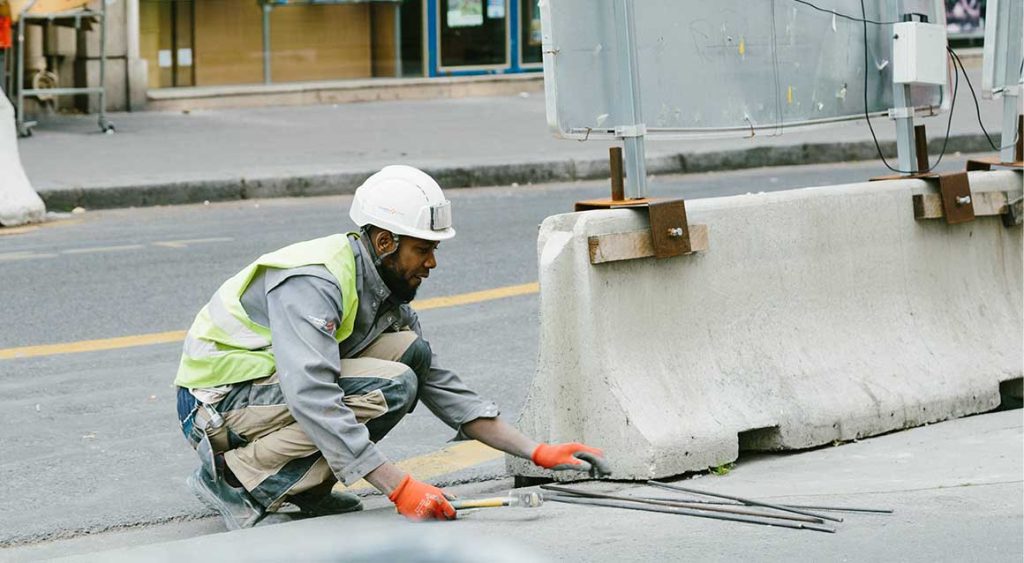
In order to build a strong and long-lasting structure, materials must be carefully layered during the road construction process. To further improve the stability of the roadbed, subbase materials are added and compacted, such as gravel or crushed stone. The final wearing surface is supported by base courses, which are the main load-bearing layer and are usually made of aggregate and concrete or asphalt.
The finished product of the construction process is the road’s visible and usable surface, which is made of concrete or asphalt. A number of variables, including traffic volume, climate, and financial constraints, influence the decision between concrete and asphalt. Asphalt is a versatile and reasonably priced material that is frequently chosen due to its simplicity of installation and upkeep. Concrete is used for long-lasting and high-traffic applications because of its resilience to wear and durability.
Beyond the actual layers of pavement, there are other complexities involved in road construction. In order to control water flow and stop erosion, drainage features including culverts, stormwater drains, and gutters are incorporated into the design. In order to ensure that road users can move through the infrastructure effectively, road markings, signage, and lighting are essential for safety and navigation.
Technology is essential to improving the accuracy and efficiency of road construction in the modern day. Accurate grading and alignment are made possible by sophisticated surveying tools, GPS, and Building Information Modeling (BIM). Intelligent compaction equipment optimizes the compaction process, ensuring the uniform density of materials for a stable roadbed.
Modern road construction methods incorporate environmental considerations. To reduce the ecological impact, the construction process incorporates erosion control techniques, recycling of pre-existing pavements, and sustainable materials. Permeable pavements that permit water penetration are an example of a green technology that helps create robust and ecologically friendly road infrastructure.
Road construction is important for more reasons than just the physical infrastructure; it is a driving force behind social cohesion, economic expansion, and cross-cultural interaction. Roads facilitate the effective flow of goods and services by creating channels for trade and commerce. By bringing communities together, they promote regional integration and make jobs, healthcare, and education more accessible.
To sum up, building a road is an intricate symphony of planning, engineering, and environmental stewardship. It is the thread that connects people, places, and opportunities together to form the fabric of contemporary society. The future of road construction will be defined by creativity, efficiency, and a dedication to creating infrastructure that endures as technology develops and sustainability gains prominence.